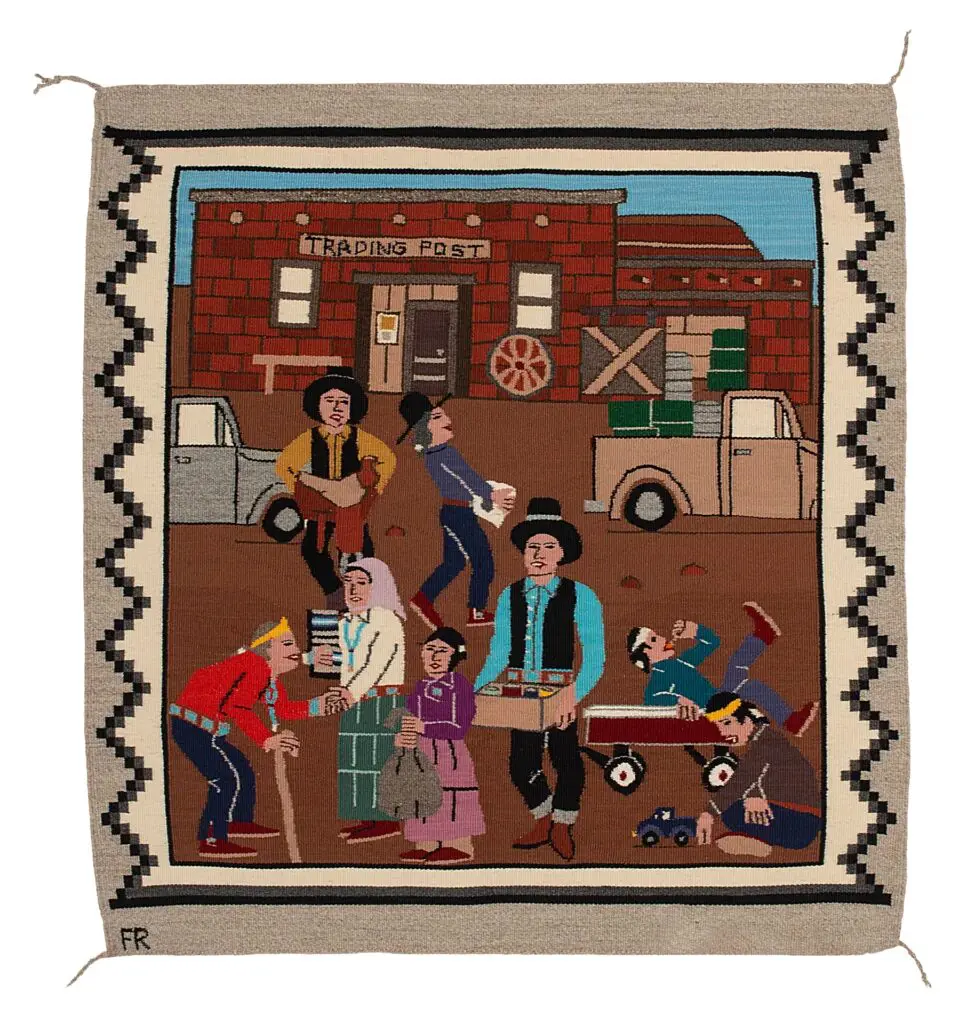
November marks Native American Heritage Month, and the Heard Museum has unveiled an important new exhibition, Twilight: Trading Posts & Creative Legacies, in the Virginia G. Piper Grand Gallery.
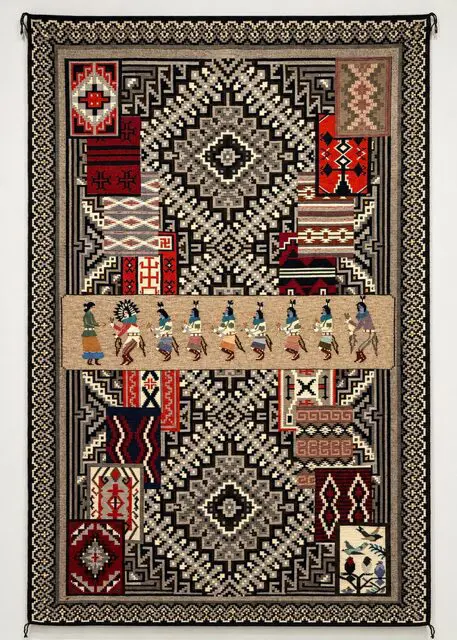
Through a curated collection of Native American rugs and textiles, the Heard Museum weaves together the story of Indigenous trading posts, from their heyday and eventual decline to their evolution into modern-day stores and marketplaces.
Decades ago, Native American trading posts were a mix of community stores, art marketplaces, cultural gathering places and educational centers, all while operating as businesses. Traders controlled much of the marketplace from the late 1800s into the early 1900s. Indigenous artwork was often credited to the trading post itself or to a regional style rather than the individual artist who created it.
There are several reasons certain rug and textile styles became associated with specific trading posts. Native American children often learned weaving techniques from their grandparents, who passed down the colors, patterns and traditions associated with their individual tribes.
As the trading post era faded into history, the creative legacies passed down through generations of Indigenous families didn’t disappear. They evolved. Today, artists continue to honor their cultural roots while pushing their creative vision into new territory. The exhibition puts Navajo textiles in the spotlight while also exploring trading post connections to pottery, jewelry and photography.
Considerable research went into identifying the artists behind the pieces in the exhibition and giving them proper credit. In more recent decades, individual Native American artists have increasingly received recognition for their work.
Recently, an enthusiastic group of Heard Museum donors and supporters gathered for the debut of Twilight: Trading Posts & Creative Legacies over coffee, breakfast and creative discussion. David M. Roche, Dickey Family Director and CEO, says, “The real gift of this exhibition is Dr. Ann Marshall, who did a superb job curating this exhibition.”
Marshall, the Heard Museum’s director of research, brought together an important collection of rugs and textiles from the museum’s holdings that tells the story of trading posts, the growth of the Indigenous art market and the creative legacies that continue today.
Have You Heard?
The new exhibition is a vivid reminder that Indigenous artistry is more than a tradition preserved. It’s a living, breathing force that continues to create, challenge and inspire while honoring the past.
The renowned Heard Museum is a Phoenix cultural powerhouse with an international reputation for putting American Indian art, history and culture in the spotlight. Since opening in 1929, the nonprofit museum has gone beyond showcasing beautiful objects, bringing the stories, traditions and creative fire of Indigenous artists and communities, particularly those of the Southwest, to the forefront. From historic masterpieces to contemporary works that challenge convention, the Heard connects visitors with the people behind the art and the cultural legacies that continue to shape the region.
Insider Takeaways
-
Trading Posts Take Center Stage: The Heard Museum celebrates Native American Heritage Month with Twilight: Trading Posts & Creative Legacies, exploring the rise, decline and evolution of Indigenous trading posts.
-
More Than a Marketplace: Trading posts served as community hubs, cultural gathering places and commercial centers that helped shape the Indigenous art market.
-
Giving Credit Where It’s Due: The exhibition digs into the history behind the artwork, working to identify Indigenous artists whose creations were historically credited to trading posts or regional styles rather than individuals.
-
Creativity Runs in the Family: Generations of Indigenous families passed down weaving techniques, colors and patterns, creating lasting artistic legacies.
-
A Cultural Powerhouse Delivers: Curated by Dr. Ann Marshall, the exhibition puts Navajo textiles and rugs in the spotlight, proving Indigenous creativity is anything but stuck in the past.
The Heard Museum is located at 2301 N. Central Ave., Phoenix, AZ 85004. Visit heard.org for a complete list of exhibitions, special events and more.