Your next wellness purchase could come with more legal fine print than you bargained for. The next big shake-up in hemp comes down to a very small number: 0.4 milligrams. Not per gummy. Not per capsule. Per container.
For shoppers who have wondered how THC drinks and gummies ended up one click away, the answer starts with the Farm Bill’s definition of hemp. Now that definition is tightening, and the fallout could reach beyond products sold for a buzz.
The new federal definition excludes finished hemp-derived cannabinoid products containing more than 0.4 milligrams per container of combined total THC, including THCA, and other cannabinoids determined by federal health officials to have, or be marketed as having, similar effects. This is not a blanket ban on every hemp product or a rule limited to online sales.
Most changes are scheduled for Dec. 11, 2026, following a delay from the original November deadline. A separate exclusion covering cannabinoids the cannabis plant cannot naturally produce took effect Nov. 12. These changes narrow what qualifies as hemp under federal law; products falling outside that definition may become subject to federal controlled-substance laws.
Dan Bruce, co-founder of natural products company Hempsolv, says the situation grew from a collision between hemp commerce and intoxicating products.
The 2018 Farm Bill defined hemp using a threshold of no more than 0.3% delta-9 THC by dry weight, opening a market separate from marijuana. It did not set the same kind of per-container limit now approaching. Some businesses used that framework to sell intoxicating hemp-derived products, including products made by converting other cannabinoids into THC. Their legality has remained subject to other federal requirements and state restrictions.
“So what they started doing is using chemistry in labs to do the extracts from hemp and then virtually make, or effectively make, the psychoactive THC analogs from the hemp extracts,” Bruce tells The AZ Insider.
The new rules also exclude certain cannabinoids synthesized or manufactured outside the plant and shift the concentration standard to total THC, including THCA. Industrial hemp used for products such as fiber and grain remains included in the definition. This is a substantial restriction on cannabinoid products, rather than a blanket prohibition on every hemp use.
The surprise is in the bottle, not just the gummy.
Bruce explains, “Historically compliant companies, like Hempsolv, are less affected since we predominantly have zero-THC products, except for those (like Relief) that have a very small amount of naturally occurring THC. We may have to package those as smaller amounts in the future or use less of our unique hemp powder as a consequence.”
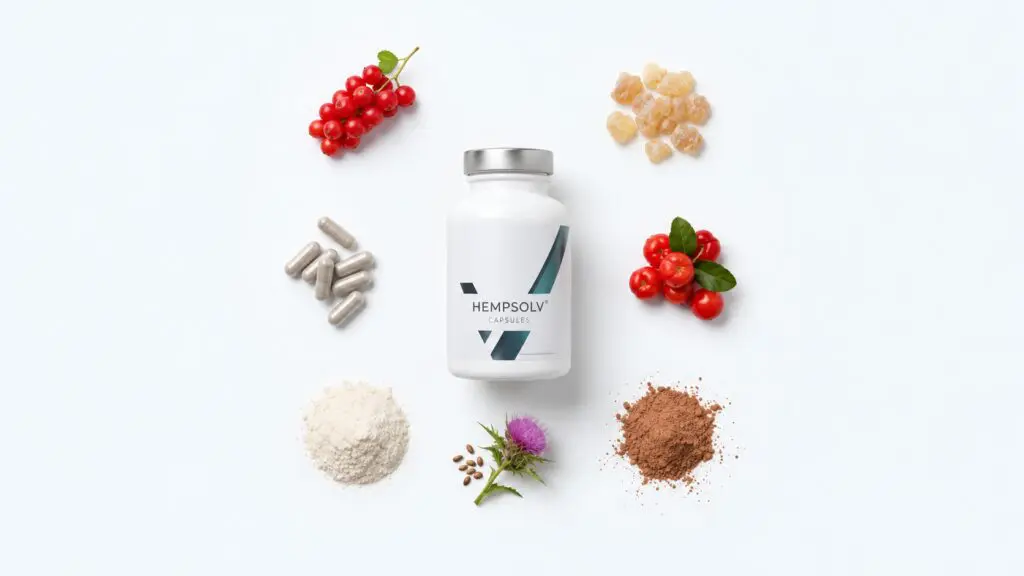
Hempsolv makes larger capsule bottles to reduce packaging, labor and shipping costs, Bruce says. But a per-container cap means more capsules can push a bottle over the threshold even when the amount in each capsule remains unchanged. A product sold for wellness, rather than a buzz, can still run into that math. Smaller bottles or reformulation could bring added costs. What shoppers ultimately pay will depend on the changes manufacturers make.
Bruce supports addressing access to intoxicating products, particularly by minors. His concern is how broadly the changes could affect companies making natural products.
CBD itself is not automatically prohibited. However, some CBD products contain enough THC to exceed the new limit. A familiar “below 0.3% THC” label alone won’t establish compliance with the additional container restriction.
Hempsolv says its zero-THC formulas use CBD isolate, while Relief contains raw hemp powder with trace THC and is its only product with trace THC. Those are company descriptions, not a determination that any particular bottle meets the coming requirements. Current batch results and the amount in the entire container matter. Qualifying as hemp also does not, by itself, establish FDA approval, safety or compliance with every food and drug rule.
Arizona has its own restrictions, too. Attorney General Kris Mayes has warned that selling THC-infused edibles and beverages without a valid marijuana establishment license is illegal under state law. Federal hemp labeling does not override those rules.
Bruce also worries about losing options for people who turned to lower-dose products. He explains, “The honest companies making lower dose THC products that served as sleep support products or relaxation/alcohol replacement products really get punished. Again, it was certainly a gray market by synthesizing psychoactive analogs from hemp, but that gave many folks who aren’t true cannabis aficionados an ability to research online and purchase lower dose options for their wants. To many, walking into a cannabis dispensary is a foreign concept and those only have options available in and from their respective state.”
For consumers, the useful questions are specific: What’s in the entire package? Is current batch testing available? Will the formula remain compliant after Dec. 11? Congress could still change the requirements, but another delay is not guaranteed.
Insider Takeaways
- Dec. 11 is the next deadline: Most federal hemp-definition changes are scheduled for that date in 2026.
- The package matters: The 0.4-milligram cap applies per container, not per capsule, gummy or serving.
- CBD isn’t automatically banned: Trace THC can still put some CBD products over the new limit.
- Arizona rules still apply: THC-infused edibles and drinks require properly licensed marijuana sellers.
- Check the actual product: Ask manufacturers for current batch results and their plans for the new requirements.
For additional information about the company, visit hempsolv.com.