Imagine leaving the hospital after a serious illness or injury, clutching discharge instructions that call for rest, medication, and follow-up care. Now imagine having no bed, no bathroom, and no safe place to recover.
For thousands of people experiencing homelessness, that’s not a hypothetical. It’s a dangerous reality.
On Friday, Nov. 13, Circle the City is opening a new chapter in compassionate health care with the grand opening of its 85-bed East Valley Medical Respite Center in Mesa, the first facility of its kind in the East Valley.
The $24 million project addresses a glaring gap in the region’s health care system: Until now, East Valley hospitals have lacked a dedicated medical respite option for patients who are stable enough to leave the hospital but too sick or injured to recover safely on the streets.
A Hospital Discharge Shouldn’t Be a Dead End
“Too many people leave the hospital with discharge instructions they have no way to follow, because they have nowhere safe to recover,” said Dr. Kim Despres, CEO of Circle the City. “The East Valley Medical Respite Center changes that. It gives people a clean bed, medical care, and the support they need to heal, and it gives our hospital partners somewhere to send them.”
And this isn’t simply a roof and a mattress.
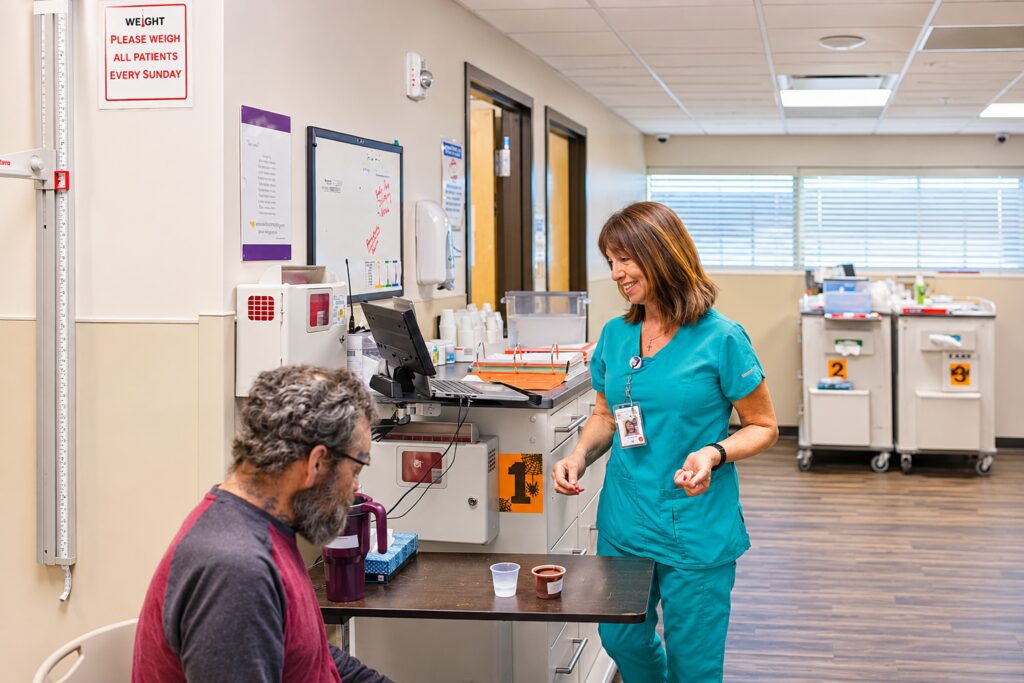
Patients receive three fresh meals daily, medical care, round-the-clock nursing support, behavioral health services, substance use intervention, physical therapy, transportation to appointments, care coordination, and case management.
In other words, the essentials for recovery that most people take for granted.
The Numbers Tell an Uncomfortable Story
According to the Maricopa Association of Governments’ Point-in-Time Count, Mesa’s population experiencing homelessness increased 238% between 2017 and 2024.
The population is also aging. At Circle the City’s Downtown Phoenix respite center, the average patient is 55. People living on the streets can experience cognitive decline and mobility limitations at rates comparable to housed adults 20 years older.
The consequences extend beyond individual suffering. Without appropriate recovery care, patients can cycle through emergency departments and hospitals, straining already stretched resources.
Medical respite care offers an alternative. Circle the City reports that 77% of patients who complete their respite care plans leave with a housing plan, rather than returning to the streets or a shelter.
That’s not just better health care. It’s a potential turning point.
From One Woman’s Vision to 185 Beds
Founded in 2008 by Sister Adele O’Sullivan, Circle the City began with a simple but powerful conviction: People experiencing homelessness deserve quality medical care and a safe place to heal.
In 2012, the organization opened Arizona’s first medical respite center for people experiencing homelessness.
“When Sister Adele started caring for people on the streets of Phoenix, she saw that the sickest among them needed a safe place to heal,” Despres said. “This center carries that vision into the East Valley, and it wouldn’t be possible without the partners and donors who believed in it.”
The Mesa facility joins two 50-bed Phoenix centers, bringing Circle the City’s total to 185 medical respite beds Valleywide.
The new center will also create approximately 120 jobs and generate more than $13 million in annual local spending.
Recovering from illness shouldn’t depend on having an address. And dignity should never be an optional part of the treatment plan.
Grand Opening Details
When: Friday, Nov. 13, 2026, at 9 a.m.
Where: 5456 E. Main St., Mesa
Who: Circle the City CEO Dr. Kim Despres and founder Sister Adele O’Sullivan, CSJ, M.D., will deliver remarks.
Insider Takeaways
- 185 Beds, One Mission: Three respite centers now provide recovery care across the Valley.
- Care Never Clocks Out: Approximately 120 team members will support the Mesa facility’s 24/7 operations.
- Food Is Medicine, Too: At capacity, the center will serve up to 1,785 nutritious meals weekly.
- Beyond the Bed: Medical treatment, behavioral health services, and housing planning help patients move toward stability.
- The Mission Continues: Circle the City also operates two outpatient clinics, five mobile medical units, and five street medicine teams.
For more information, visit circlethecity.org