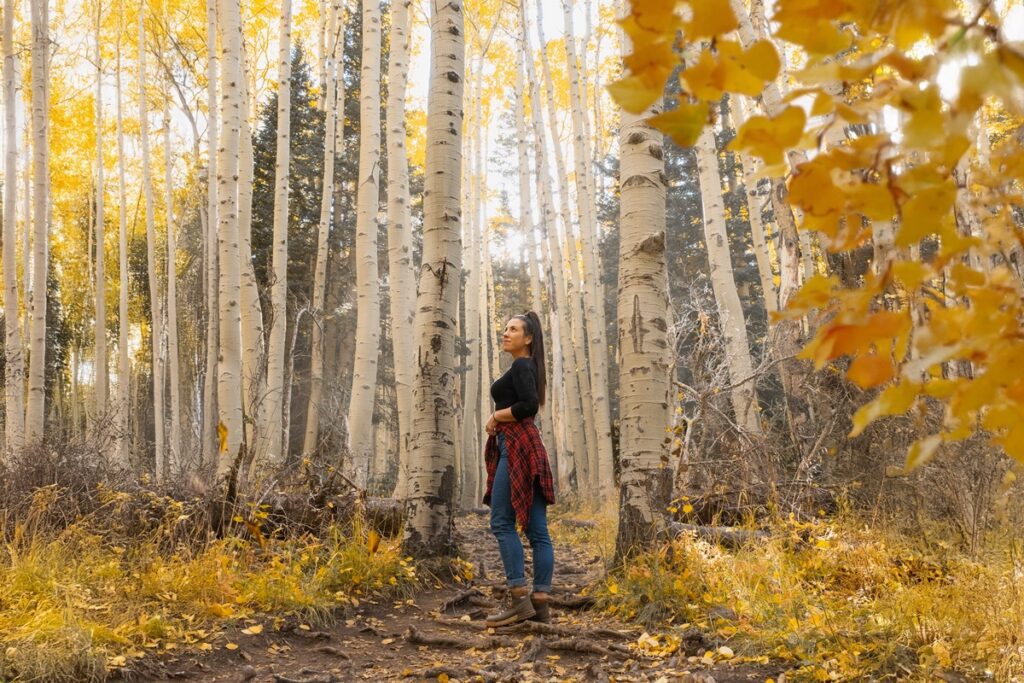
Every fall, Northern Arizona turns gold, and thousands of people make the same mistake: They chase a date instead of an elevation.
There is no single “peak weekend” for Arizona fall colors. The season moves downhill in waves. One grove can be bare while another, 2,000 feet lower, is just beginning to turn.
The question locals ask is not, “Is Arizona at peak?” It is, “At what elevation?”
Follow the Elevation, Not the Calendar
Cold nights reach the highest country first, so color often begins in late September on the upper San Francisco Peaks and the Kaibab Plateau. From there, it moves down Snowbowl Road through Aspen Corner, the Aspen Nature Loop area and Hart Prairie. Flagstaff’s neighborhoods and Northern Arizona University follow. Oak Creek Canyon usually comes later, adding cottonwoods, oaks, maples and sycamores to the show.
Where to Find the Gold
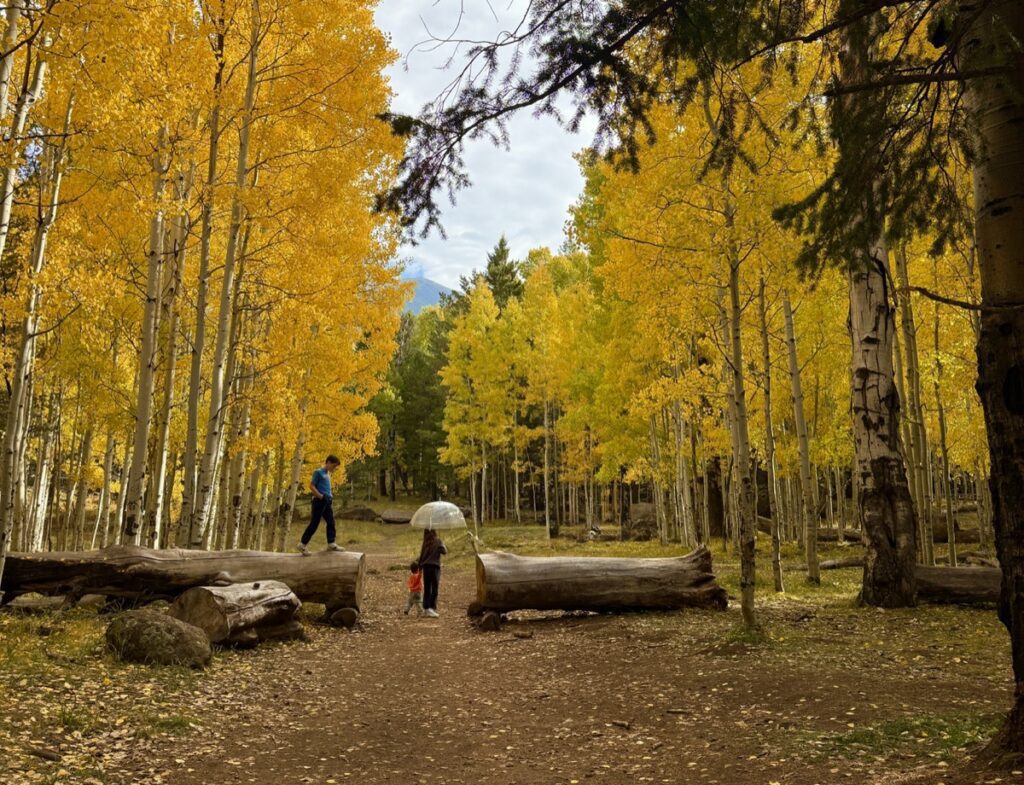
Start with Snowbowl Road. The paved climb moves quickly from ponderosa forest into aspen country, checking several elevations in one drive. Aspen Corner delivers immediate color, but parking is limited and October weekends get crowded. Full means full. Glowing leaves do not turn the shoulder into a legal parking space.
For a longer walk beneath the canopy, the Aspen Nature Loop covers 2.5 miles near 9,000 feet. It is approachable for many active families, but altitude and uneven ground still count. Camera rolls tend to edit out the heavy breathing.
When Aspen Corner is crowded or fading, I often head to Hart Prairie. Farther from downtown, it can mean fewer people without skimping on aspens. The payoff is dense color, open meadow and views of the Peaks.
Lockett Meadow is where outdated advice can cause trouble. The old drive-in plan is gone. Reaching the meadow requires roughly a six-mile round-trip hike before any extra distance into the Inner Basin. One small water bottle and good intentions are not preparation.
When the Crowds Thin Out
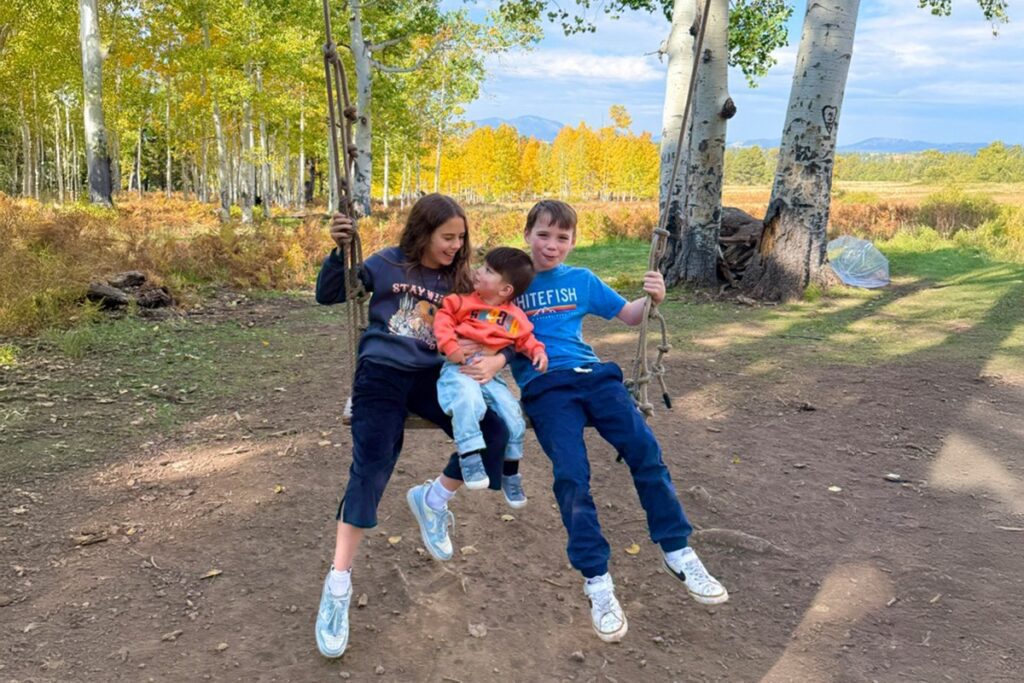
Timing can completely reshape the Flagstaff fall-color experience. Last October, I took my children to one of Flagstaff’s busiest fall-color trails during peak season. I expected crowds. Instead, a weekday morning delivered vibrant color, very few people and the hidden swing entirely to ourselves. We spend so much of our lives with phones in our hands or devices in front of our faces. That morning, we were outside together, excited about the same thing, and I felt like a kid again.
When the Aspens Fade, Head Lower
When the upper slopes are finished, downtown Flagstaff and the Northern Arizona University campus may still be glowing. They offer easy color for visitors who prefer leaves with coffee instead of a parking dispute.
Oak Creek Canyon is the later-season move. State Route 89A drops about 2,500 feet between Flagstaff and Sedona, replacing high-country aspen groves with a richer mix of yellow, orange and red. The canyon is narrow and traffic builds quickly, so developed recreation sites are the best places to stop.
The same strategy works farther south. Mount Lemmon rises from the Sonoran Desert to forests above 9,000 feet, and Catalina Highway reveals the changing landscape in one drive. Mount Lemmon’s fall colors extend the chase beyond Northern Arizona.
Discover Flagstaff’s LEAF-ometer offers a quick look at changing color. For location-by-location access, trail difficulty and backup plans, Not Lost Or Found’s Northern Arizona fall-color guide covers what generic peak-date forecasts miss.
The best itinerary includes one high-elevation stop, one in-town alternative and one lower-elevation escape route. If the Peaks are bare, go lower. If the lot is full, keep moving. Peak color is not one place or one weekend. It is a moving target, and elevation is how locals catch it.
For more information, visit notlostorfound.com.
Insider Takeaways
- Start at the highest open elevation, then move downhill if the leaves are already gone.
- Check the Flagstaff LEAF-ometer and land-manager alerts before leaving.
- Visit Snowbowl Road early on a weekday for softer light, lighter traffic and easier parking.
- Plan on hiking to Lockett Meadow; motor vehicles cannot reach it, and the approach is roughly six miles round trip.
- Keep Hart Prairie, downtown Flagstaff and Oak Creek Canyon ready as backup plans.
- Leave the aspens alone. Carving damages living tissue, and those initials may outlast the relationship.
Shannon Roberts is a Flagstaff-based photographer, community builder and filmmaker at Not Lost Or Found.