
Elon Musk’s latest Arizona ambition comes with a large power cord.
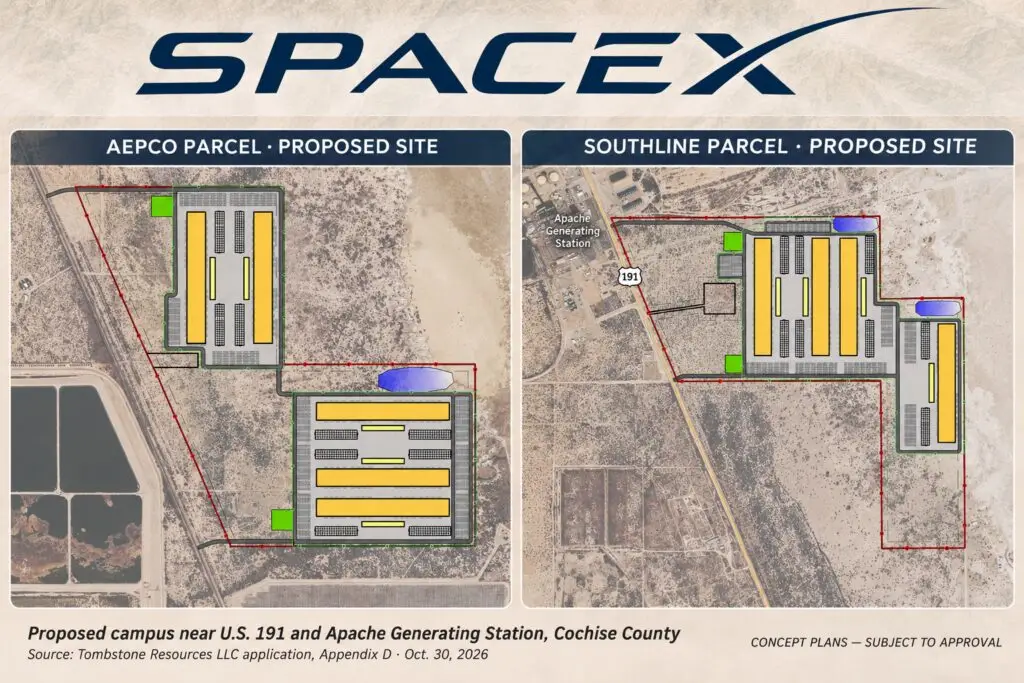
SpaceX wants a 747-acre supercomputing campus near Willcox Playa, about 80 miles east of Tucson. Think artificial intelligence, enormous buildings, and a rural community facing a development proposal with industrial-strength consequences.
The application, filed Oct. 30 by Tombstone Resources LLC, seeks county authorization for up to nine computing buildings near the Apache Generating Station along U.S. Highway 191. Each building would span approximately 493,000 square feet. Subtle, this is not.
The project would roll out in four phases. Construction could begin in March 2027 if approvals come through, but operating timelines depend on electricity infrastructure upgrades. A construction target is not an opening date.
Power, Water, and a Desert Reality Check
At full buildout, the proposed campus would require approximately 6 gigawatts of electricity, delivered through Sulphur Springs Valley Electric Cooperative and Arizona Electric Power Cooperative.
The application describes roughly $3.6 billion in company-funded transmission and substation improvements. Battery storage would help manage interruptions and fluctuations. Whether residents see the promised benefits deserves scrutiny beyond the presentation slides.
Water is another flashpoint in a region already wrestling with groundwater depletion.
The application proposes dry cooling, no new groundwater production well, and annual operational water use of approximately 7 to 10 acre-feet. Most would serve employees’ domestic needs. Those are proposed operating parameters, and residents want protections that survive changes in ownership or operations.
For neighbors, the questions extend beyond the faucet: noise, construction traffic, lighting, wildlife, and the future of the valley’s rural character.
Big Promises Meet Bigger Questions
Nearly 300 people attended a Nov. 4 community meeting, according to The Arizona Republic. Reactions ranged from enthusiasm over employment to opposition over resources and transparency.
Company representatives projected approximately 1,000 permanent jobs at full buildout and touted tax revenue, lower electricity bills, and a 20% property tax reduction. Those are company projections, not guaranteed household savings.
Supporters see an economic opportunity with horsepower. Skeptics want enforceable restrictions covering water consumption, noise, lighting, and future operational changes.
That distinction matters. A reassuring presentation lasts an evening. Permit conditions can shape what happens for decades.
Insider Takeaways
- Proposed footprint: 747 acres near Willcox Playa, with up to nine computing buildings.
- Electricity demand: Approximately 6 gigawatts at full buildout, with grid upgrades required.
- Water plan: Dry cooling and approximately 7 to 10 acre-feet annually, according to the application.
- Jobs outlook: Approximately 1,000 positions projected; tax and utility benefits remain company claims.
- Public participation: A county hearing is scheduled for Dec. 9. Residents can submit comments and request to speak.
Cochise County hasn’t approved the project. Before this desert plugs into Musk’s ambitions, residents want to know who controls the switch.