You buy tomatoes at the farmers’ market. You know which coffee shop roasts its own beans. You would rather hand your money to the family-owned spot down the street than a giant chain.
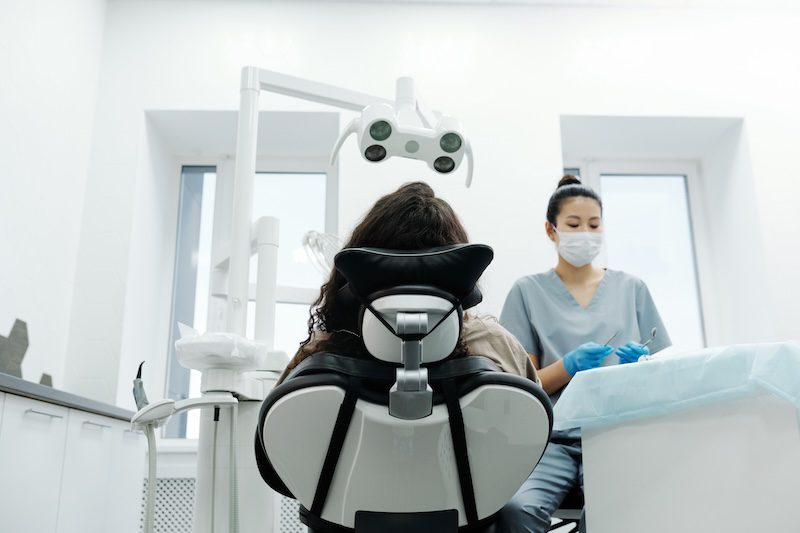
Then you book a dentist appointment. That neighborhood-looking dental office? It may not be quite as local as it seems.
Dental Support Organizations, better known as DSOs, provide business, marketing and administrative support to dental practices. Some are privately held. Others partner with private equity. And according to the American Dental Association, that relationship is not always obvious from the name on the building.
Arizona has a particularly big presence. In 2024, 25% of Arizona dentists were affiliated with a DSO, compared with 16.1% nationally. Private equity has been growing, too. ADA research found the share of U.S. dentists affiliated with private equity rose from 6.6% in 2015 to 12.8% in 2021.
So, yes. “Big Dental” is apparently part of the vocabulary now.
The subject drew fresh attention in May when California Attorney General Rob Bonta announced a $2.3 million settlement with Aspen Dental Management. The state alleged the private-equity-owned DSO went beyond providing business support and improperly became involved in the management of dental practices.
Among the allegations: Aspen offered incentives to clinical employees tied to certain sales, including payments to hygienists for clear-aligner sales.
That does not mean every DSO-supported dentist deserves immediate side-eye. The model can take administrative work off a dentist’s plate.ned the crew, he got his own burrow and a fence after one brief
But Dr. Amelia M. Ellingson, DMD, owner and dentist at Phoenix-based Swiss Biologic Dentistry, thinks patients should know who is sitting behind the business side of the chair.
“Patients usually ask who their dentist is, but almost nobody asks who owns the dental practice,” Ellingson says. “That can be a much more revealing question.”
Start there.
Is the office owned by the dentist treating patients? Another dentist? A DSO? An investment group? Then ask who controls the financial decisions. Does an outside company have influence over fees, staffing, purchasing, marketing or production goals?
“Patients should feel comfortable asking whether business decisions can influence clinical decisions,” Ellingson says. “Those are two very different things, and they should stay that way.”
Clinical autonomy matters, too. Who decides which treatment is recommended, which materials are used and whether a procedure is necessary?
And yes, it is perfectly fair to ask about incentives.
“If someone involved in your care benefits financially from selling a specific product or procedure, that is something a patient deserves to know,” Ellingson says.
Swiss Biologic Dentistry is independently owned by Ellingson and operates at 3611 N. Seventh St. in Phoenix, just north of Osborn. The practice takes a holistic approach to dentistry.
For consumers who already care about where their food, coffee and dollars come from, Ellingson says health care belongs in the same conversation.
“A local-looking name does not always mean local ownership,” she says. “People can ask one more question before they choose where to go.”
Insider Takeaways
- In 2024, 25% of Arizona dentists were affiliated with a DSO, compared with 16.1% nationally.
- A DSO can provide administrative and business support without necessarily owning the dental practice.
- Some DSOs partner with private equity firms, but DSO affiliation and private equity ownership are not the same thing.
- Patients can ask who owns the office, who controls financial decisions and whether the dentist has full clinical autonomy.
- It is also fair to ask whether anyone involved in care receives incentives tied to certain products or procedures.
- Swiss Biologic Dentistry is independently owned by Dr. Amelia M. Ellingson in Phoenix.